One of Ireland’s Oldest Baronies
Baron of Dunsany
The Plunketts of Meath
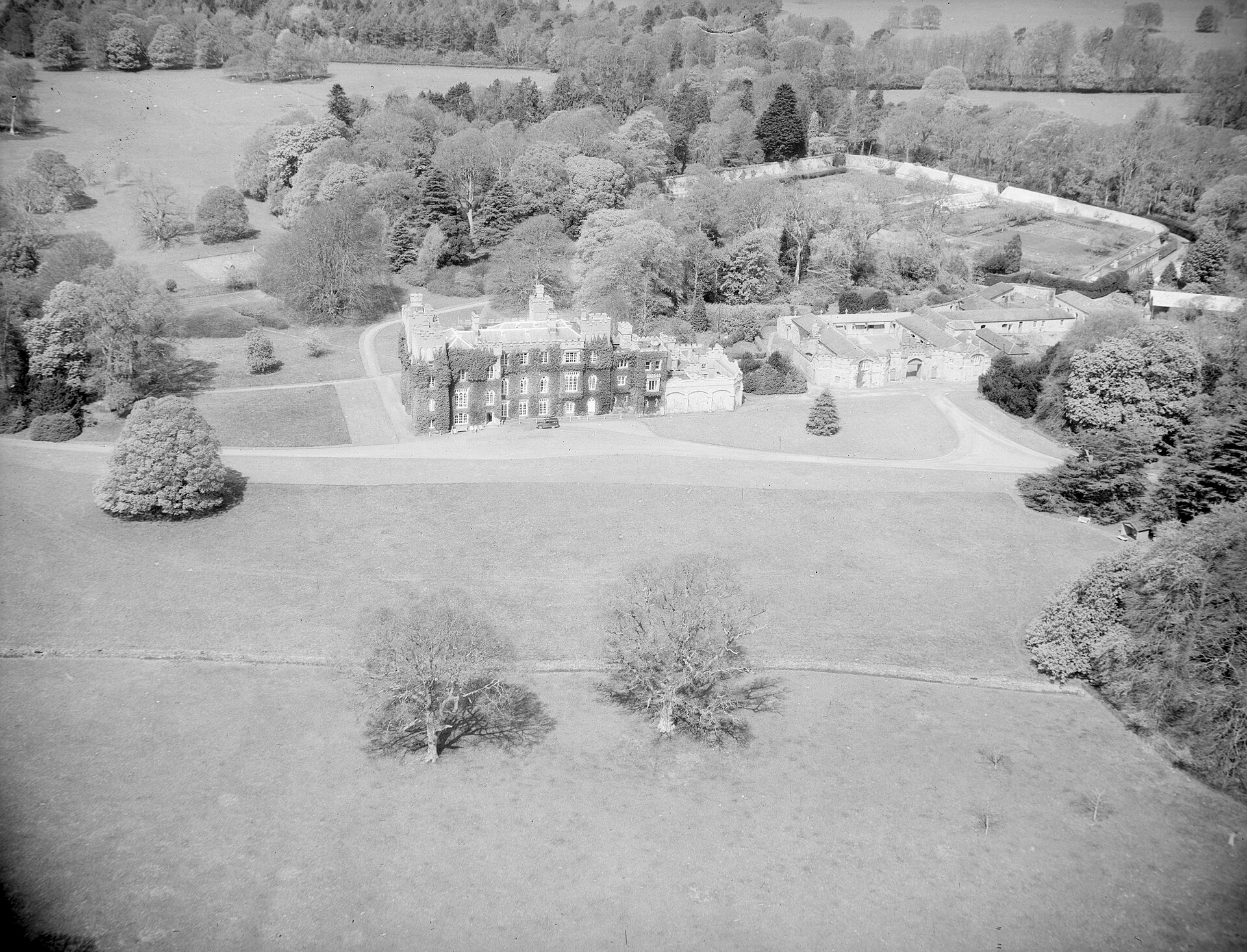
Few titles in the Peerage of Ireland carry as long and unbroken a thread as the Barony of Dunsany. The Plunketts have sat at their castle in County Meath since the early fifteenth century, surviving the Reformation, the Cromwellian wars, the Williamite confiscations, and two world wars without losing their seat. Their line produced a martyr-saint, a galaxy of soldiers and statesmen, and, in the twentieth century, one of the strangest and most original writers in the English language.
Hiberno-Norman origins
The Plunketts came to Ireland in the wake of the Anglo-Norman conquest and took root in County Meath, the heartland of the English Pale. By the fifteenth century they had grown into one of the most powerful Catholic families in Leinster, with branches that would multiply across the province. The senior line settled at Killeen Castle and eventually became Earls of Fingall; a younger branch received the lands of Dunsany and with them the foundation of a separate barony.
Sir Christopher Plunkett, that younger son, was created Baron of Dunsany about 1439. The date is disputed in the sources, some placing the creation as late as about 1462, but the family and the standard peerage authorities give precedence to the earlier year. Either way the title ranks among the oldest surviving in the Peerage of Ireland, pre-dating the Tudor settlement and most of the great Anglo-Irish dynasties that would come to prominence in later centuries.
The castle the Plunketts made their seat was not new when they arrived. Dunsany Castle, near the Hill of Tara in County Meath, stands on a Norman foundation of about 1181, raised by Hugh de Lacy’s followers in the first generation of the conquest. The Plunketts have occupied and adapted it ever since, making Dunsany Castle one of the longest continuously inhabited houses in Ireland.
Faith and kinship: St Oliver Plunkett
The Plunketts were a Catholic family through the centuries of the Penal Laws, and the most famous member of their wider kin was not a baron but a priest. Oliver Plunkett (1625–1681), Archbishop of Armagh and Primate of All Ireland, was a kinsman of the Dunsany line, born to a branch of the same Meath family. He was arrested in 1678 during the anti-Catholic hysteria of the Popish Plot, transported to London, and tried on fabricated charges of treason. He was hanged, drawn, and quartered at Tyburn on 1 July 1681, the last Catholic martyr to die in England. Pope Paul VI canonised him in 1975.
The connection underlines the character of the Plunketts as a family: steadfastly Catholic in a Protestant polity, connected to the ecclesiastical as well as the secular life of Ireland, and willing to pay a high price for their convictions. The Dunsany line navigated those centuries with more fortune than Oliver Plunkett, holding their castle and their title through repeated political storms.
Dunsany Castle and the long continuity
Dunsany Castle has been extended, remodelled, and furnished across six centuries, and today presents a house of considerable antiquarian interest. Its collection of paintings, silver, and manuscripts accumulated by the Plunkett family reflects the breadth of their connections across Ireland and Europe. The castle sits within a demesne that has itself been a subject of active interest in recent years.
The continuity of occupation is the most remarkable thing about the property. Where dozens of great Irish houses passed through confiscation, ruin, or sale between the seventeenth and twentieth centuries, Dunsany remained with the same family in an uninterrupted line. That stability is exceptional even by the standards of the English peerage, let alone by the turbulent standards of Irish landownership.
Lord Dunsany, fantasist and chess champion
The most celebrated holder of the title was Edward John Moreton Drax Plunkett, 18th Baron of Dunsany (1878–1957). He succeeded to the barony in 1899 and spent the next half-century producing a body of work that placed him at the origin point of modern fantasy literature. His first book, The Gods of Pegāna (1905), invented a complete mythology for a fictional world: gods, cosmogony, priests, and ritual, all rendered in a prose style that owed something to the King James Bible and something to nothing else at all.
Later works include The King of Elfland’s Daughter (1924), widely regarded as his masterpiece, a novel of enchantment and longing set in a world where the boundaries between mundane life and faerie are permeable and dangerous. He wrote plays as well as fiction, and worked with W. B. Yeats and Lady Gregory at the Abbey Theatre in Dublin, where five of his short plays were produced in 1909. He was also an accomplished chess player, a pistol-shooting champion, and a big-game hunter: a man of formidably various gifts.
His influence on later writers was direct and acknowledged. J. R. R. Tolkien read him carefully; H. P. Lovecraft named him as a primary inspiration and wrote critical essays on his work; Ursula K. Le Guin cited him as a forerunner of the genre she practised. For a writer now somewhat outside the mainstream reading canon, his fingerprints are everywhere in twentieth-century imaginative fiction. He wrote more than sixty books across a career that lasted until his death at the castle in 1957.
Rewilding and the present barony
The 21st Baron, Randal Plunkett (born 1983), succeeded his father Edward, 20th Baron, in 2011. A filmmaker by training, he has taken the Dunsany estate in a direction unusual for an Irish landowner of any generation. Since succeeding, he has rewilded approximately 750 acres of the demesne, removing livestock, allowing scrub and woodland to regenerate, and reintroducing native species. Dunsany became Ireland’s first member of the European Rewilding Network, a distinction that has attracted considerable attention both within Ireland and internationally.
The project represents a sharp break with the agricultural and shooting traditions of the Irish ascendancy estate, and Randal Plunkett has spoken publicly about the ecological rationale in interviews and documentary appearances. It places the barony in an interesting position: one of the oldest titles in the Peerage of Ireland, carried by a family with an unbroken connection to the same ground since the fifteenth century, now engaged in an experiment in restoring that ground to something like its pre-agricultural character.
For an older Irish peerage family and their long rivalry and kinship with the Plunketts, the article on the Barons Kingsale covers the Peerage of Ireland’s senior title. The Gaelic world in which the Hiberno-Norman families like the Plunketts eventually took root is described in Gaelic Nobility.
The Barons of Dunsany, Succession
The barony was created about 1439 for Sir Christopher Plunkett, a younger son of the 1st Baron Killeen. The Plunketts have held Dunsany Castle without break since about 1400. The 18th Baron was the author and fantasist Lord Dunsany (1878–1957); the present holder is Randal Plunkett, 21st Baron, who has rewilded much of the Dunsany demesne.
The founding line
- — Christopher Plunkett, 1st Baron of DunsanyCreated Baron of Dunsany about 1439 (some sources c.1462); a younger son of the 1st Baron Killeen; established the cadet line at Dunsany Castle, Co. Meath, which stands on a Norman foundation of about 1181.
- — Christopher Plunkett, 2nd Baron of DunsanySucceeded to the barony and continued the family’s position as one of the leading Catholic noble houses of the Pale.
Later barons
- — Patrick Plunkett, 7th Baron of DunsanyHeld the barony through the period of the Elizabethan wars; the Catholic Plunketts navigated successive political crises under the Tudor and early Stuart crowns.
- — Patrick Plunkett, 8th Baron of DunsanyA contemporary of the wider Plunkett kin network that included the future martyr Oliver Plunkett (1625–1681), Archbishop of Armagh.
- — Randal Plunkett, 14th Baron of DunsanyHeld the barony into the eighteenth century; the Dunsany line retained its castle through the Cromwellian and Williamite upheavals that displaced many Catholic landowning families.
- — Edward Plunkett, 17th Baron of DunsanyFather of the author; died 1899.
- — Edward Plunkett, 18th Baron of DunsanyBorn 1878; died 1957 at Dunsany Castle. Author of The Gods of Pegāna (1905) and The King of Elfland’s Daughter (1924); chess and pistol champion; collaborated with Yeats and Lady Gregory at the Abbey Theatre; a primary influence on Tolkien, Lovecraft, and Le Guin.
- — Randal Plunkett, 19th Baron of DunsanySucceeded 1957; died 1999.
- — Edward Plunkett, 20th Baron of DunsanyDied 2011.
- — Randal Plunkett, 21st Baron of DunsanyBorn 1983; succeeded 2011; filmmaker; has rewilded approximately 750 acres of the Dunsany demesne; Ireland’s first member of the European Rewilding Network.
Six Centuries at the Same Gate
The Plunketts of Dunsany have sat at the same Norman gate since the early fifteenth century. They produced a canonised martyr in the person of their kinsman Oliver Plunkett, a writer who helped invent a genre in the person of the 18th Baron, and a rewilding pioneer in the person of the present holder. The barony is one of the oldest in Ireland; the castle is one of its longest-inhabited houses. That double continuity, of title and of place, is what distinguishes Dunsany from most of the noble stories the island has to tell.