The Oldest Irish Barony
Baron Kingsale
Premier Baron of Ireland
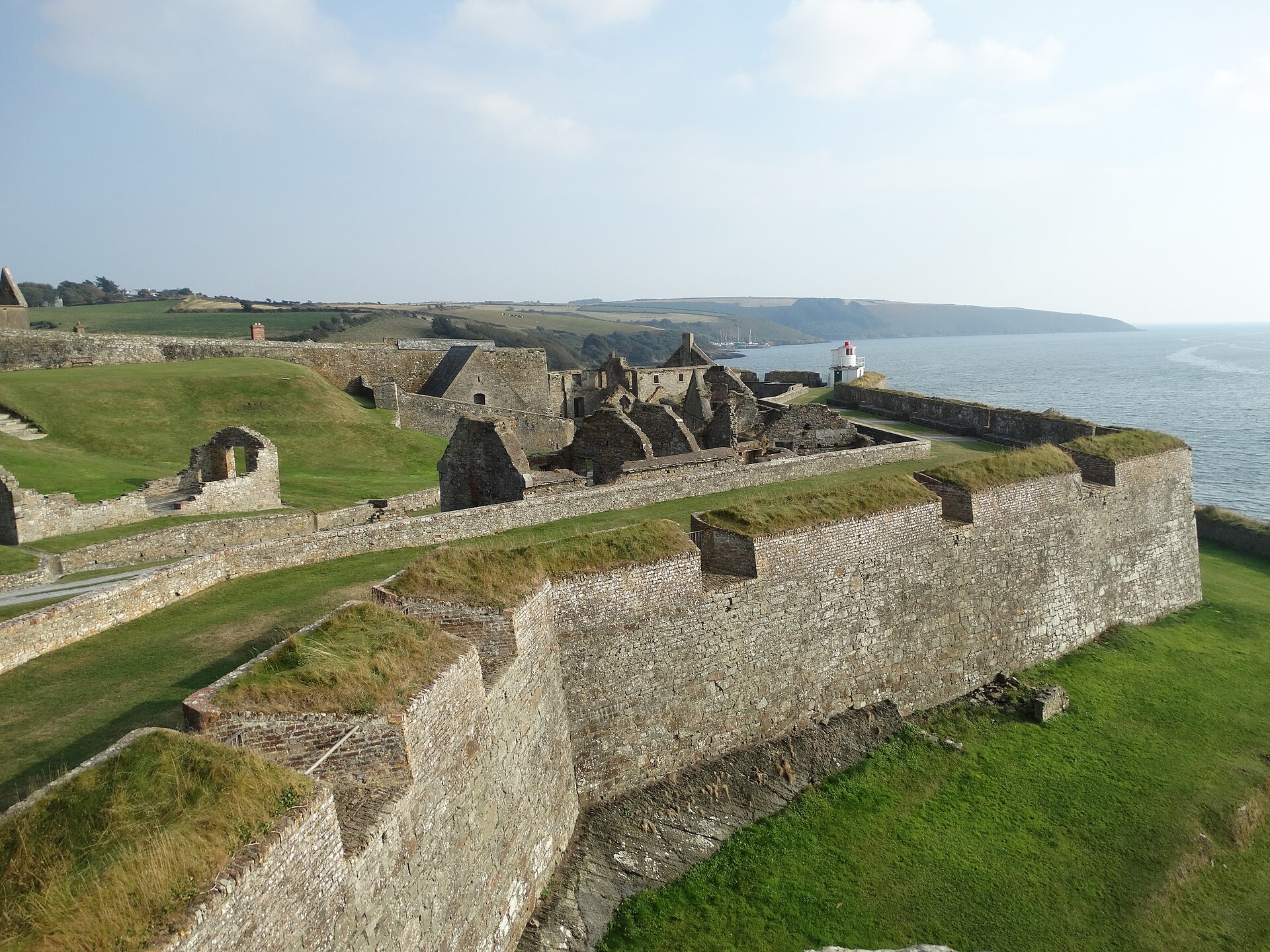
Of all the dignities in the Peerage of Ireland, the Barony of Kingsale claims the greatest antiquity. Its precedence is dated to 1223, its family to the most daring of the Anglo-Norman adventurers, and its holder carries a privilege no other peer in the British Isles can boast: the right to remain covered, hat on head, in the very presence of the sovereign. Whether that privilege rests on royal grant or on long-tolerated legend, no monarch has yet put it to the test.
John de Courcy and the conquest of Ulster
The de Courcy story begins not with a barony but with a raid. In 1177 John de Courcy, a knight of uncertain fortune and considerable audacity, led a small force north from Dublin without royal commission and seized Downpatrick, the ecclesiastical capital of Ulster. He defeated Ruaidrí Mac Duinn Sléibe, last king of Ulaid, in the field and made himself ruler of much of eastern Ulster by sheer speed and violence. It was among the most brazen acts of personal conquest in the whole Anglo-Norman settlement of Ireland.
From Downpatrick he built an empire of fortifications. Carrickfergus Castle, rising above Belfast Lough, and Dundrum Castle in County Down became the anchors of a territory he governed as a near-independent prince, issuing his own charters, making his own alliances with the Irish Church, and styling himself Princeps Ulidiae, Prince of Ulster. For nearly three decades he held that position, answerable in name to the English crown but in practice to no one.
His end came in 1204. Hugh de Lacy, made Earl of Ulster by King John, moved against him with the king’s authority. De Courcy was captured, his lands taken, and he spent years as a prisoner and exile. He died, date uncertain, having lost the power he had won by force. The Ulster branch of the family was broken, but a Munster branch kept estates around Kinsale and Ringrone in County Cork, and from those lands the barony takes both its name and its survival.
The premier barony
The precedence of the Barony of Kingsale is dated to 1223, when Miles de Courcy is reckoned the first Baron. A formal creation is sometimes placed around 1340, but the family has always insisted on the earlier date, and the claim to seniority has been conceded by the heralds and the crown: the holder of the Kingsale title is styled Premier Baron of Ireland, the oldest of all Irish barons.
The name itself carries both spellings, Kingsale and Kinsale, without settled preference. The town of Kinsale in County Cork, near the Old Head and the ruins of Ringrone Castle, marks the heart of the family’s Munster territory, a coastline very different from the drumlin landscape of the Ulster strongholds where John de Courcy had begun his adventure.
The privilege of the hat
No feature of the Kingsale barony has drawn more attention than the claim to remain covered in the presence of the sovereign. The traditional account runs as follows: a de Courcy held prisoner by King John was offered his freedom if he could find a champion to fight in single combat against a French knight sent for the purpose. He accepted the challenge; the Frenchman, seeing him approach, turned and fled without striking a blow. In gratitude John restored his lands and granted him and his heirs the right to wear their hats before the king in perpetuity.
No documentary grant of the privilege survives. Scholars have searched and found nothing. The story has the shape of legend rather than of record, and it exists in several versions, none authoritative. Yet no sovereign has disputed the claim, and the Lords Kingsale have asserted it with complete consistency. The privilege is listed without irony in the standard works of Irish peerage, and when a Lord Kingsale has appeared at court the point has not been pressed against him.
It is, in the end, one of those curiosities that the British peerage system quietly accommodates: a claim too old and too harmless to challenge, and too singular to ignore.
Arms, motto, and the long decline
The de Courcy arms are clear and heraldically strong: Argent, three eagles displayed gules, three red eagles spread on a silver field. The motto is Vincit omnia veritas, "Truth conquers all things", a motto that sits with some irony against a family whose most famous privilege rests on an undocumented legend.
By the modern period the family had lost its Cork estates. The pattern is familiar enough in Irish history: confiscations, debt, political misfortune, and the general ruin visited on the old Anglo-Norman houses over the seventeenth and eighteenth centuries. The Lords Kingsale were no longer Cork landowners when the nineteenth century opened. The barony survived, but the material base that had supported it did not.
For a wider picture of the Anglo-Norman nobility who were their neighbours and rivals, the article on the Butlers of Ormonde covers the most powerful of those families in detail. The surrounding Gaelic world they moved in is described in Gaelic Nobility.
The barony today
The present holder is Nevinson Mark de Courcy, 36th Baron Kingsale, born in 1958, who succeeded in 2005 on the death of his uncle John de Courcy, 35th Baron. He is Premier Baron of Ireland and lives in New Zealand. The barony carries the dignity of the oldest Irish peerage and the right to stand covered before the sovereign; it does not carry estates, a seat, or any of the material apparatus that once accompanied such a title.
Almeric de Courcy, 23rd Baron Kingsale, who died in 1720, was buried in Westminster Abbey, a reminder that even in its reduced condition the family retained a certain standing. The 35th Baron, who died in 2005, was the last holder to be widely known in Ireland. The 36th Baron is, by his own account, a private citizen in the southern hemisphere, the holder of a remarkable dignity in circumstances that are by any measure modest.
The barony endures because baronies endure. Its precedence, its privilege, and its arms remain what they have always been: the residue of one of the most dramatic personal conquests in the medieval history of these islands.
The Barons Kingsale, Succession
The precedence of the barony is dated to 1223. The family descends from John de Courcy, conqueror of Ulster in 1177, whose Munster kinsmen held lands at Kinsale and Ringrone in County Cork. The barony is the oldest in the Peerage of Ireland and its holder is styled Premier Baron of Ireland.
The conquest of Ulster
- — John de Courcy, conqueror of UlsterSeized Downpatrick in 1177 without royal commission; ruled eastern Ulster as near-independent prince for nearly thirty years; built Carrickfergus and Dundrum castles; captured by Hugh de Lacy in 1204 and lost his Ulster lands; died c.1219.
- — Miles de Courcy, reckoned 1st Baron KingsaleOf the Munster branch of the family, holding lands at Kinsale and Ringrone, County Cork; the precedence of the barony is dated from his tenure, c.1223.
The Premier Barons of Ireland
- — William de Courcy, 4th Baron KingsaleAmong the early barons who asserted the covering privilege before the sovereign; the barony is sometimes given a formal creation c.1340 in his period.
- — Almeric de Courcy, 23rd Baron KingsaleDied 1720; buried in Westminster Abbey, one of the few Irish barons of the period to be accorded that distinction.
- — Gerald de Courcy, 31st Baron KingsaleA nineteenth-century holder of the premier barony; the Cork estates had by this period been lost.
- — John de Courcy, 35th Baron KingsaleHeld the barony through much of the twentieth century; died 2005.
- — Nevinson Mark de Courcy, 36th Baron KingsaleBorn 1958; succeeded 2005; Premier Baron of Ireland; resident in New Zealand.
The Oldest Title, an Uncommon Claim
Eight centuries of precedence rest on a conquest that lasted thirty years, a Munster coastline that the family has long since ceased to own, and a privilege supported by legend rather than by document. That the barony survives, still recognised, still listed first among the barons of Ireland, is a testimony to the tenacity with which the de Courcys have maintained their claim and to the quiet conservatism of a peerage system that does not easily set aside what it has once admitted. The Premier Baron of Ireland lives today as a private citizen on the far side of the world. The hat privilege remains his, unchallenged, unused, and entirely intact.