An Ulster Royal Dynasty
The O’Donnells of Tyrconnell
The Princes of Donegal
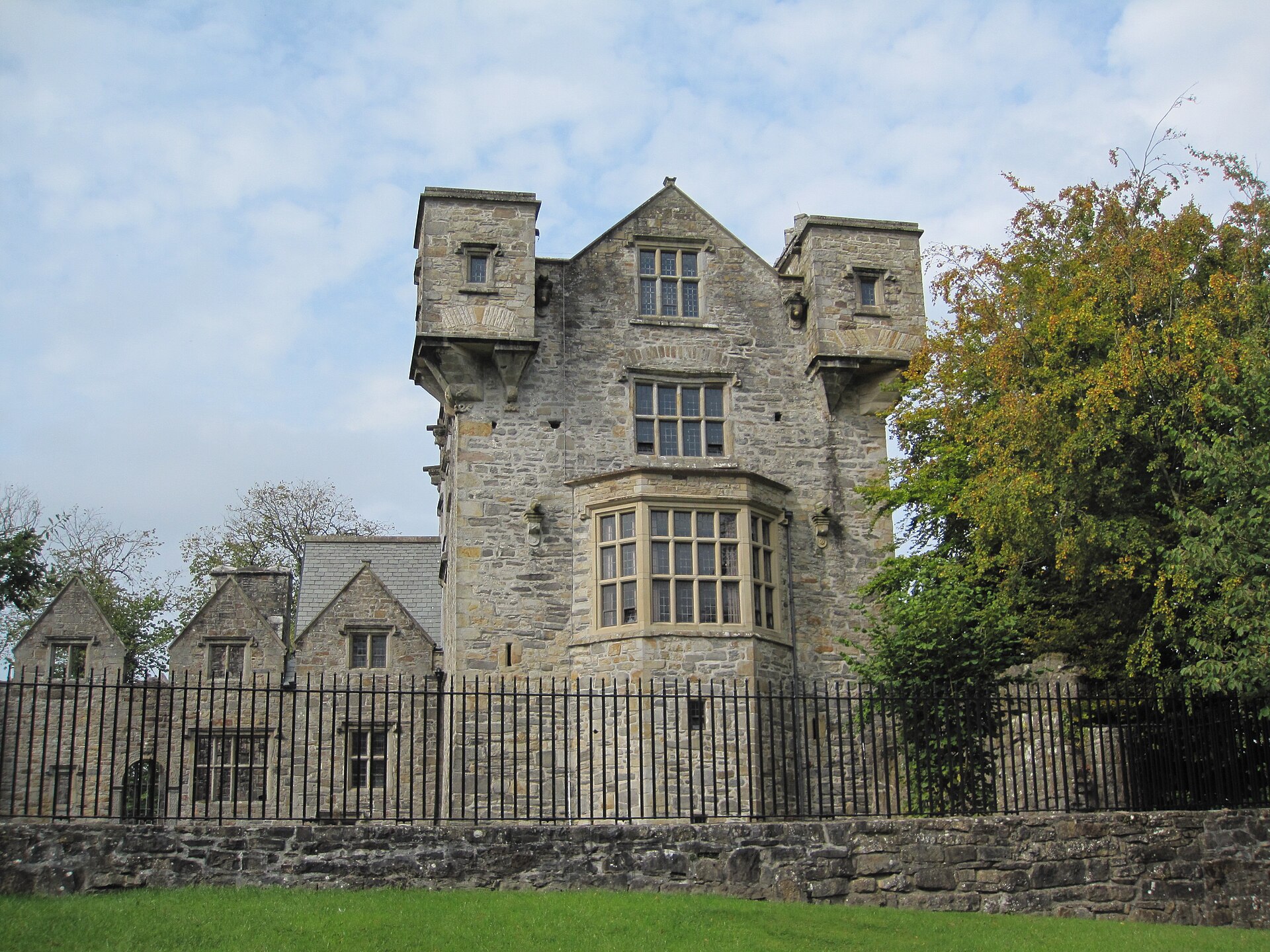
The O’Donnells of Tyrconnell ruled the wild Atlantic coastlands of the north for four centuries, holding Tír Chonaill against neighbour, invader, and rival alike. Of the Cenél Conaill, they were kinsmen and rivals of the O’Neills, claiming descent from the same ancestor: Niall of the Nine Hostages. They inaugurated their lords at the Rock of Doon near Kilmacrenan and made Donegal Castle their seat. Their story reaches its climax with Red Hugh O’Donnell, who escaped a Dublin prison, fought the crown to a standstill, and died in Spain still seeking help. After the Flight of the Earls in 1607, the O’Donnells became a dynasty of exile — soldiers, generals, and statesmen in the courts of Europe, but never again lords of Donegal.
The Cenél Conaill: origins of the dynasty
The O’Donnells take their name from Domhnall Mór O’Donnell, lord of Tír Chonaill, who died in 1241. Their deeper lineage reaches back to Conall Gulban, a son of Niall of the Nine Hostages, the semi-legendary fifth-century king whose sons partitioned the north of Ireland between their kindreds. Conall’s descendants, the Cenél Conaill, held the western territory of Tír Chonaill — the land of Conall — while their cousins the Cenél nÉogain, ancestors of the O’Neills, held the country to the east. Kinship bred rivalry: for centuries the two dynasties contested supremacy in Ulster, alternating between alliance and war.
The territorial name Tyrconnell is the anglicisation of Tír Chonaill, which corresponds roughly to modern County Donegal. From their inaugural site at the Rock of Doon, a glacial erratic above Gartan Lough near Kilmacrenan, the O’Donnells were proclaimed lords of their people in an ancient ceremony that persisted long after the Norman world had reshaped the rest of Ireland. Their principal seat was at Donegal Castle, on the River Eske where it meets Donegal Bay.
Manus O’Donnell: the scholar-chief
Among the medieval lords of Tír Chonaill, Manus O’Donnell stands apart as a figure of unusual cultivation. He ruled from around 1537 until his deposition by his own son in 1555, and died in 1563. In an age when Gaelic lordship was measured chiefly in cattle-raids and military campaigns, Manus was also a man of letters. He compiled and edited the Betha Colaim Chille — the Life of St Columba — in Irish, drawing together earlier sources into a substantial biography of the saint who was himself of the Cenél Conaill and the greatest missionary of Irish Christianity.
The Life of Columba is one of the most important vernacular texts of the Irish Middle Ages, and its composition under the patronage and direct hand of a sitting Gaelic lord is a reminder that the culture the Tudors were in the process of dismantling was not a barbaric one. Manus also entered into negotiations with England, signing an indenture with Henry VIII in 1539, though he never submitted to surrender and regrant in the manner of Conn Bacach O’Neill. The O’Donnells, unlike the O’Neills, retained their Gaelic style longer and more stubbornly.
Red Hugh O’Donnell: the escape and the war
No figure in the O’Donnell story burns as brightly as Hugh Roe O’Donnell, known always as Red Hugh — Aodh Ruadh — for the colour of his hair. Born around 1572, he was seized by the English in 1587 while still a youth and held in Dublin Castle as a political hostage, a measure intended to secure his father’s compliance. In January 1592, along with two other Ulster prisoners, Red Hugh escaped through the walls of the castle in winter and fled north across the Wicklow Mountains. One of his companions died of exposure; Red Hugh lost both his great toes to frostbite. He reached Tír Chonaill and was inaugurated lord in his father’s place within months.
The alliance Red Hugh forged with Hugh O’Neill, 2nd Earl of Tyrone, produced the most formidable Gaelic military coalition in Irish history. Together they led the Nine Years’ War, humiliating English armies at the Ford of the Biscuits in 1594 and at the Battle of the Yellow Ford in 1598, the worst defeat the crown had suffered in Ireland. Red Hugh’s western command gave the confederacy depth; he drove English forces from Connacht and kept the western provinces in play. For the intertwined story of the O’Neills, who led the same war from Tyrone, see the O’Neills of Tyrone.
Kinsale and the death in Spain
The turning point came in September 1601 when a Spanish fleet of some four thousand men landed at Kinsale in the far south of Munster — the wrong end of Ireland for an Ulster rising. O’Neill and O’Donnell marched their armies the length of the country in winter to meet their allies. The combined attack on the English besieging force on 24 December 1601 was repulsed. The Battle of Kinsale effectively ended the war’s last serious chance.
Red Hugh did not wait to see the full consequences. Within weeks of Kinsale he sailed to Spain to seek further aid from Philip III, landing at La Coruña and making his way to Valladolid, where the Spanish court then resided. He died there in July 1602, aged about thirty. The cause remains debated: contemporaries suspected poison, administered on behalf of the English crown through an agent named James Blake. Whether by poison or by the accumulated exhaustion of a man who had lived under impossible pressure since his teenage years, Red Hugh O’Donnell was dead before he could sail back to Ireland.
The Flight of the Earls and the Plantation
After Kinsale, Red Hugh’s brother Rory O’Donnell negotiated terms. He was created 1st Earl of Tyrconnell in 1603, the same year O’Neill received the terms of Mellifont. The settlement was uneasy. On 14 September 1607, Rory O’Donnell and Hugh O’Neill sailed from Rathmullan on Lough Swilly with nearly a hundred members of the Ulster nobility, intending to seek Spanish support for a renewed campaign. The ship carried the last of the old Gaelic order of Ulster. They never returned. Rory O’Donnell, 1st Earl of Tyrconnell, died in Rome on 28 July 1608, less than a year after the departure. He was twenty-six.
The departure of the earls triggered the Plantation of Ulster: the systematic confiscation of six Ulster counties and their resettlement with English and Scottish colonists. Tír Chonaill was planted. Donegal Castle passed to English hands. The Gaelic lordship of the O’Donnells was extinguished as a political fact, though not as a family memory. For the wider context of what the Plantation meant for Ireland’s Gaelic Nobility, the Flight of the Earls remains the defining rupture.
The O’Donnells in exile: Austria and Spain
The O’Donnells in exile followed the well-worn paths of the Irish diaspora into the Catholic armies of Europe. In Austria, a branch of the family rose to prominence under the Habsburgs. Karl O’Donnell served the Empire as a soldier and diplomat; Maximilian Karl, Count O’Donnell, commanded Austrian forces during the Seven Years’ War in the mid-eighteenth century and was raised to the rank of Field Marshal. The Counts O’Donnell became a fixture of the Habsburg nobility, their Irish origins worn as a mark of distinction.
In Spain, the family reached its greatest modern eminence. Leopoldo O’Donnell, born in Tenerife in 1809 to an Irish-descended family long settled in Spanish service, became one of the most significant political figures of nineteenth-century Spain. A general who rose through the Carlist Wars, he served three times as Prime Minister of Spain and led the military campaign in Morocco that produced his title: 1st Duke of Tetuan, granted in 1860. Leopoldo O’Donnell died in 1867. The dukedom passed through his descendants and continues in Spain; by some reckonings the present Dukes of Tetuan represent the senior surviving male line of the O’Donnell dynasty, though the formal chiefship of the name is not settled. State recognition of the chiefs of Irish names by the Office of the Chief Herald of Ireland was discontinued in 2003, leaving the question of the O’Donnell chiefship without official resolution.
The O’Donnells of Tyrconnell, Succession
The O’Donnell succession runs from the medieval lords of Tír Chonaill through the Tudor earldom of Tyrconnell to the exiled lines in Austria and Spain, whose descendants carried the family name into the courts of Europe.
Lords of Tyrconnell
- — Domhnall Mór O’DonnellEponymous ancestor of the O’Donnell name; lord of Tír Chonaill; d. 1241.
- — Aodh Ruadh O’Donnell (the elder)Lord of Tír Chonaill; greatly extended O’Donnell power in Ulster; d. 1505.
- — Manus O’DonnellScholar-chief and compiler of the Betha Colaim Chille, the Life of St Columba in Irish; signed indenture with Henry VIII 1539; deposed by his son c. 1555; d. 1563.
- — Hugh Roe O’Donnell (Red Hugh)Escaped Dublin Castle 1592; co-led the Nine Years’ War with Hugh O’Neill; after defeat at Kinsale 1601 sailed to Spain to seek aid; d. Valladolid, 1602.
Earls and exiles
- — Rory O’Donnell, 1st Earl of TyrconnellCreated Earl of Tyrconnell 1603; fled Ireland in the Flight of the Earls from Lough Swilly, 14 September 1607; d. Rome, 28 July 1608, aged twenty-six.
- — Maximilian Karl, Count O’DonnellAustrian Field Marshal; commanded Habsburg forces in the Seven Years’ War; representative of the O’Donnell line in Imperial service.
- — Leopoldo O’Donnell, 1st Duke of TetuanGeneral and three-times Prime Minister of Spain; led the Morocco campaign 1859–60; created Duke of Tetuan 1860; b. 1809, d. 1867. By some reckonings, his descendants the Dukes of Tetuan represent the senior surviving male line of the O’Donnell dynasty.
- — O’Donnell chiefship (present)The Gaelic lordship ended with the Flight of the Earls. State recognition of Irish chiefs was discontinued in 2003. The chiefship of the name is not formally settled; no holder is currently recognised by the Office of the Chief Herald of Ireland.
The princes of Donegal
The O’Donnells held Tír Chonaill for four centuries against every force that sought to displace them. They gave Ireland one of its most vivid heroes in Red Hugh, whose escape from Dublin Castle and death in Spain bookend the catastrophe of the Nine Years’ War. They gave Europe soldiers and statesmen: from the Counts O’Donnell in Habsburg service to Leopoldo O’Donnell, who governed Spain three times over and left a dukedom still extant. The Plantation of Ulster erased the physical lordship. The Rock of Doon fell silent. But the name and its story crossed the sea intact, and in the courts of Madrid and Vienna, in the long memory of the Irish diaspora, the O’Donnells of Tyrconnell endured as something the Plantation could confiscate but could not quite destroy.