The Most Numerous Irish Name
The Murphys
Ó Murchadha, Kin of the Kings of Leinster
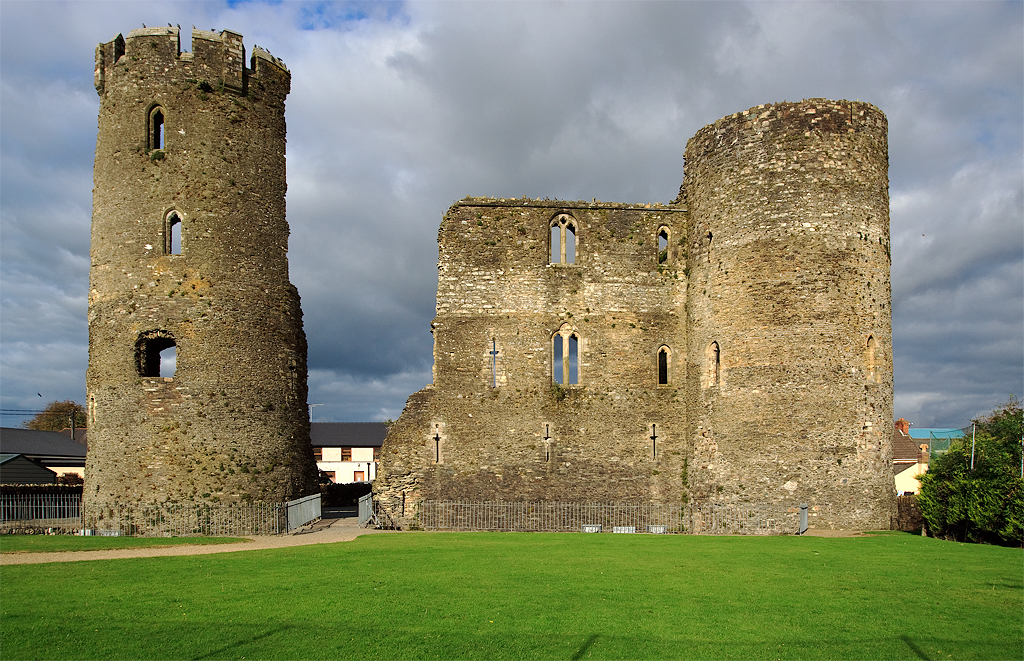
Murphy is the most common surname in Ireland. Behind that plain fact lies a tangled ancestry: three Gaelic septs from Leinster, Munster and Ulster, each carrying the name Ó Murchadha or Mac Murchadha, "descendant of Murchadh," the sea-warrior. The greatest of them, the Uí Cheinnselaig Murphys of Wexford, are collateral kin of Diarmait Mac Murchada, King of Leinster, the man whose invitation to the Normans in 1169 set in motion the conquest of Ireland. For eight centuries that inheritance has shaped how the name is remembered.
Murchadh and the three septs
The personal name Murchadh, meaning "sea-warrior" or "sea-battler," was popular across early medieval Ireland, and three distinct families adopted it as their surname. The most significant is the Uí Cheinnselaig sept of Leinster, rooted in Wexford and the surrounding territory of Uí Felmeda. They were not the direct line of the kings of Leinster but their collateral kin, sharing the same Uí Cheinnselaig blood that produced the ruling dynasty.
The second sept, Ó Murchadha of Muskerry, held their territory in County Cork within the ancient kingdom of Desmond. The third, a Mac Murchadha sept, occupied parts of Ulster. All three branches anglicised to Murphy at varying points under English administration, when Gaelic names were forced into Latin registers and English phonetics. The sheer number of people now carrying the surname reflects not one great house but the convergence of independent Gaelic lineages beneath a single spelling.
Diarmait Mac Murchada and the Norman arrival
No figure in Irish history is more controversially attached to the Murphy name than Diarmait Mac Murchada, King of Leinster, who died in 1171. Expelled from his kingdom by the High King Ruaidrí Ua Conchobair in 1166, Diarmait sought help abroad. He secured the permission of Henry II of England to recruit allies in his dominions, then crossed to Wales, where he found willing partners among the Anglo-Norman lords, above all Richard de Clare, Earl of Pembroke, known to history as Strongbow.
The arrangement was direct. Diarmait offered Strongbow his daughter Aoife in marriage and, with her, the succession to the kingship of Leinster. Strongbow landed in Wexford in 1169 with a force of knights and archers. Together they took Wexford, Waterford and Dublin. Diarmait recovered his kingdom but died in 1171 before he could manage what he had unleashed. Strongbow succeeded him, and Henry II arrived that same year to assert his own suzerainty. The island Ireland had known before 1169 was gone. Whether Diarmait should be remembered as a dynast defending his rights or as the man who opened his country to conquest is a question Irish writers have never fully settled.
The MacMurrough-Kavanaghs: kings after the conquest
The royal line of Leinster did not vanish. Diarmait’s descendants continued as kings in name and in practice for centuries after Strongbow’s arrival, adopting the surname Mac Murchada Caomhánach, MacMurrough-Kavanagh, from an ancestor fostered by the Kavanagh family. They governed their Leinster territories with considerable autonomy, negotiating and fighting with the English crown as circumstances demanded.
Art Óg Mac Murchadha Caomhánach, who died around 1417, was the most formidable of the later kings. He harassed the English Pale for decades and famously received Richard II of England in 1399 at a dramatic meeting in which the king sought his submission. Art Óg rode out in the full display of Irish kingship, armed and mounted, and the encounter satisfied neither party. He resisted English control until his death.
Domhnall Spáinneach, "the Spaniard," who died in 1632, was the last figure recognised as King of Leinster. The title had become largely nominal by then, but its persistence for four centuries after the Norman arrival reflects both the tenacity of the Gaelic order and the limits of English authority outside the Pale.
Father John Murphy and the rising of 1798
Among the Wexford Murphys the name most fixed in Irish memory is Father John Murphy of Boolavogue, born in 1753. A Catholic priest who had little connection to radical politics before the spring of 1798, he became one of the principal leaders of the United Irishmen’s Wexford rising after the brutal disarming campaigns of the Crown forces turned local communities towards rebellion.
Murphy led the insurgent forces at the storming of Enniscorthy and the capture of Wexford town in late May 1798, and the rebel army reached its greatest extent under his command. The rising was defeated within weeks. After the battle of Kilcumney Hill, Murphy was captured, hanged and beheaded, his body burned. He was 45. The song "Boolavogue," written long after his death, made him the human face of a doomed insurrection, and he remains one of the most commemorated figures in Wexford’s history.
Diaspora and the chiefly line
The Great Famine of the 1840s carried the Murphy name across the world. Already the most common surname in Ireland before the Famine, it became one of the most recognisable Irish names in the United States, Britain, Canada and Australia as emigration reshaped the Irish population. The Murphys who left Wexford and Cork in those years settled in Boston, New York, Melbourne and Liverpool, carrying the name far from the territory of Uí Felmeda.
The chiefly succession of the Wexford sept passed in the modern era to the O’Morchoe, the recognised head of the Ó Murchadha of Uí Felmeda. The Chief Herald of Ireland acknowledged the chieftaincy from 1943, though it is worth noting that the Irish state formally discontinued recognition of Gaelic chiefs in 2003; the title is therefore social and historical rather than legally current. Major-General David O’Morchoe, born 1928, held the position from the mid-twentieth century until his death in 2019, when his son Dermot O’Morchoe succeeded as The O’Morchoe. Their arms, recorded for the chiefly family, are Argent, an apple tree eradicated proper, on a chief vert a lion passant or, with the motto Fortis et hospitalis, "Brave and hospitable." For the wider context of Gaelic chiefly recognition, see Gaelic Nobility and the parallel survival of the O’Briens of Thomond.
The Murphys, Succession
The Murphy succession is presented in two panels: the royal line of Leinster, to which the Wexford Murphys are collateral kin, and the O’Morchoe, the recognised chiefs of the Uí Felmeda sept.
Kings of Leinster
- — MurchadhThe eponymous ancestor; the personal name meaning "sea-warrior" from which Ó Murchadha and Mac Murchadha derive.
- — Diarmait Mac MurchadaKing of Leinster; expelled 1166, recruited Strongbow and Anglo-Norman forces, offering his daughter Aoife and the succession to Leinster; recovered his kingdom before his death, 1171; his invitation opened Ireland to Norman rule.
- — Art Óg Mac Murchadha CaomhánachKing of Leinster; resisted English authority for decades; received Richard II of England in 1399 in a celebrated encounter; d. c. 1417.
- — Domhnall Spáinneach"The Spaniard"; the last figure recognised as King of Leinster; d. 1632.
The O’Morchoe
- — Father John Murphy of Boolavogue1753-1798; Catholic priest and leader of the Wexford rising of 1798; stormed Enniscorthy and led rebel forces at their greatest extent; captured and executed after the battle of Kilcumney Hill.
- — David O’MorchoeMajor-General; The O’Morchoe, recognised chief of the Ó Murchadha of Uí Felmeda; 1928-2019.
- — Dermot O’MorchoeThe O’Morchoe; succeeded his father David in 2019; present head of the chiefly line.
The most numerous name
The Murphys carry a paradox. Theirs is the most common name in Ireland, which might suggest a diluted or dispersed identity, yet behind it lies one of the most consequential connections in Irish history: collateral kinship with the king whose invitation brought the Normans to Wexford in 1169. The septs spread, the Famine scattered them further, Father Murphy of Boolavogue gave the name a martyr’s face, and the O’Morchoe holds the chiefly line still. From a sea-warrior named Murchadh, a surname that now spans five continents.