738 Years in Bavaria
The House of Wittelsbach
Dukes, Electors and Kings of Bavaria
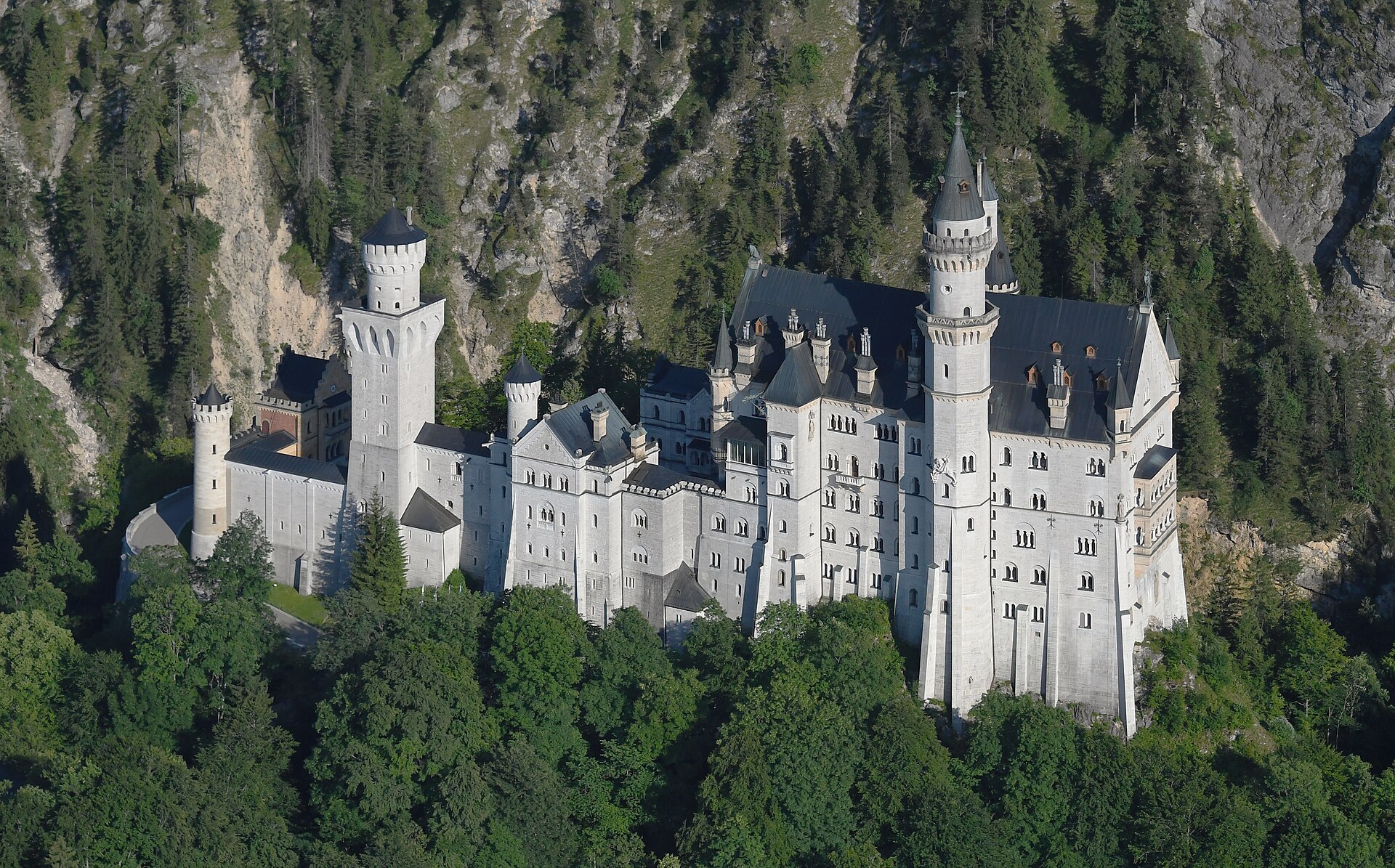
Few dynasties held a single territory as long or as personally as the Wittelsbachs held Bavaria. From the moment Otto I received the duchy in 1180, the family became inseparable from the land, its politics, its culture and its legends. Seven centuries and more of continuous rule produced two Holy Roman Emperors, a kingdom, an empress whose name still echoes across Europe, and a king so strange and singular that the world has never quite finished arguing about him.
Otto I and the fall of Henry the Lion
The family takes its name from Wittelsbach Castle in what is now Upper Bavaria, the seat of a line of Counts Palatine of the old Bavarian duchy. When Henry the Lion, Duke of Saxony and Bavaria, refused to come to the aid of Frederick Barbarossa at the Battle of Legnano in 1176 and was subsequently stripped of his titles, the emperor needed a reliable man for Bavaria. Otto I of Wittelsbach, who had served the Hohenstaufen cause, received the Duchy of Bavaria in 1180 at the Diet of Altenburg.
The grant began a rule of 738 years. Other dynasties came and went across the territories surrounding Bavaria; the Wittelsbachs endured. The duchy changed shape, was divided among heirs, reunited, elevated and redefined, but the family remained. The constancy was remarkable in a continent where succession was always fragile.
Two emperors and a divided house
The house produced two Holy Roman Emperors. Louis IV, known as "the Bavarian," became King of the Romans in 1314 after a contested election that set him against a Habsburg rival. He was crowned Emperor at Rome in 1328 by a representative of the Roman people, bypassing the Pope, and spent much of his reign in bitter conflict with the papacy. The struggle defined the early fourteenth century and gave the Wittelsbach name its first imperial register.
The second emperor came four centuries later. When Charles VII was elected in 1742, it was the first time in three hundred years that the imperial crown had left the Habsburgs. His reign was brief and troubled, cut short by military reverses, but the Wittelsbachs had demonstrated that they could reach the summit of European power a second time.
The house had also split early. One branch kept Bavaria; a second line, the Electors Palatine, held the Rhine Palatinate and became a major force in the politics of the Reformation, producing the short-lived "Winter King" Frederick V whose acceptance of the Bohemian crown in 1618 helped ignite the Thirty Years War. The two branches were eventually reunited in Bavaria in 1777, but the division had coloured two centuries of German history.
A kingdom and a scandal
Napoleon remade the map of Germany, and the Wittelsbachs gained from it. Maximilian I Joseph, Elector of Bavaria, took Napoleon’s side and was rewarded in 1806 with a royal title. Bavaria became a kingdom, and the Wittelsbachs became kings. The alignment with France was pragmatic rather than ideological; when the tide turned, Maximilian shifted his position with equal practicality.
His grandson Ludwig I was an able ruler who transformed Munich into a city of classical architecture and made the arts a matter of state policy. He also fell. In 1846 Ludwig met Lola Montez, an Irish dancer performing under a Spanish name, and made her his mistress and, more fatally, his political confidante. She was granted citizenship, titled a countess and given a degree of influence that outraged court, church and citizens alike. When revolution swept Europe in 1848, Ludwig abdicated in favour of his son, a monarch brought down not by war or dynasty but by an unsuitable infatuation.
Ludwig II: the Swan King
No Wittelsbach, and few monarchs of any dynasty, have captured the imagination as Ludwig II has. Born in 1845, he came to the throne of Bavaria in 1864 at the age of eighteen. He was tall, handsome and deeply eccentric: far more interested in music, philosophy and architecture than in politics or warfare. His friendship with Richard Wagner began almost at once; Ludwig became Wagner’s patron, rescued him from debt and provided the conditions in which the composer completed his greatest works.
Bavaria’s defeat by Prussia in 1866 and absorption into the new German Empire in 1871 stripped Ludwig of real political power, and he retreated further into a private world of building projects. Neuschwanstein, begun in 1869, rose above a gorge in the Bavarian Alps as a stage-set realisation of medieval romance drawn largely from Wagner’s operas. Linderhof and Herrenchiemsee followed, a Versailles in miniature on an island in an Alpine lake. The projects consumed vast sums and alarmed his ministers.
In June 1886, a government commission declared Ludwig mentally unfit to rule and removed him from power. Two days later, on 13 June, he was found dead in the shallow waters of the Starnberger See, along with his accompanying physician. The official verdict was suicide by drowning, but the water was too shallow and the circumstances too irregular to close the matter. No definitive account has ever been established. Ludwig was forty years old. Neuschwanstein, unfinished at his death, became the model for the castle in Sleeping Beauty and one of the most visited buildings in the world.
Arms, motto and the Bavarian identity
The arms of the House of Wittelsbach are among the most recognisable in European heraldry: lozengy bendwise argent and azure, the white and blue diamond pattern that has become the emblem of Bavaria itself. The design appears on the state flag and in some form on nearly every object associated with Bavarian identity. Its origins lie in the thirteenth century, derived from the arms of the Counts Palatine of the Rhine, and its persistence across seven centuries of changing politics is a testament to how thoroughly the Wittelsbachs fused their own image with that of the land they ruled.
The family motto, In Treue fest, translates as "Steadfast in loyalty." The principal seats are the Munich Residenz, the vast palace complex in the heart of the city, and Nymphenburg Palace on its western edge, built from 1664 as a summer residence and still partly occupied by members of the family. Neuschwanstein stands apart, a monument not to dynastic power but to one man’s impossible longing.
The end of the monarchy and the family today
Ludwig III, the last King of Bavaria, abdicated on 12 November 1918, one day after the armistice. He was the first German monarch to fall in that convulsion; the Kaiser followed the next day. The monarchy ended without drama or battle, simply overtaken by events larger than any single crown.
The family did not withdraw from public life. Empress Elisabeth of Austria, known throughout Europe as "Sisi," was a Wittelsbach by birth, and her memory continues to be celebrated across the former Habsburg lands. The present head of the house, Franz, Duke of Bavaria, born in 1933, is a collector and patron of the arts. He holds a distinction that often surprises those who encounter it: as the senior heir of the Stuarts through the line of Henrietta of England, he is the Jacobite claimant to the thrones of the United Kingdom. It is a claim he has never pressed and does not pursue, but it means that the house whose name began with a Bavarian castle in the twelfth century carries, by the mathematics of legitimism, an unacknowledged connection to the crown of Great Britain.
The House of Wittelsbach, Succession
The Wittelsbach succession begins with the grant of Bavaria in 1180 and runs through the ducal, electoral and royal periods to the present head of the house. The line below follows the principal holders of Bavaria and the royal title.
Dukes and Electors of Bavaria
- — Otto I, Duke of BavariaGranted the Duchy of Bavaria by Frederick Barbarossa at the Diet of Altenburg, 1180, following the fall of Henry the Lion; founded 738 years of Wittelsbach rule.
- — Louis IV, Holy Roman EmperorKing of the Romans 1314; crowned Emperor at Rome 1328 without papal sanction; the first Wittelsbach to hold the imperial title; d. 1347.
- — Charles VII, Holy Roman EmperorElected Emperor 1742; the first non-Habsburg to hold the title in three hundred years; his reign was brief and troubled; d. 1745.
Kings of Bavaria
- — Maximilian I Joseph, King of BavariaFirst King of Bavaria from 1806; elevated by Napoleon in recognition of Bavarian alliance with France; founder of the kingdom.
- — Ludwig IKing of Bavaria 1825–1848; transformed Munich with classical architecture and made the arts a matter of state; abdicated amid the scandal of his affair with the dancer Lola Montez.
- — Ludwig II, the Swan KingKing of Bavaria 1864–1886; patron of Richard Wagner; builder of Neuschwanstein, Linderhof and Herrenchiemsee; declared unfit to rule June 1886; found dead in the Starnberger See, 13 June 1886; b. 1845, d. 1886.
- — Ludwig IIILast King of Bavaria; abdicated 12 November 1918, the first German monarch to fall at the end of the First World War; d. 1921.
Present house
- — Franz, Duke of BavariaPresent head of the House of Wittelsbach; b. 1933; patron of the arts; as senior heir of the Stuarts, the Jacobite claimant to the British throne, a claim he does not pursue.
Steadfast in loyalty to a land
Seven hundred and thirty-eight years is a long time to hold anything. The Wittelsbachs held Bavaria through crusade and Reformation, through the Thirty Years War and the Napoleonic reordering of Europe, through revolution and unification and the final catastrophe of 1918. They gave the territory its identity so thoroughly that even the flag carries their arms. And they produced, in Ludwig II, a figure who has outlasted every political legacy the dynasty left behind: a king defined not by what he ruled but by what he imagined, who built his dreams in stone in the Bavarian Alps and left them to the world.