Princes of the Commonwealth
The House of Radziwiłł
Magnates of Poland-Lithuania
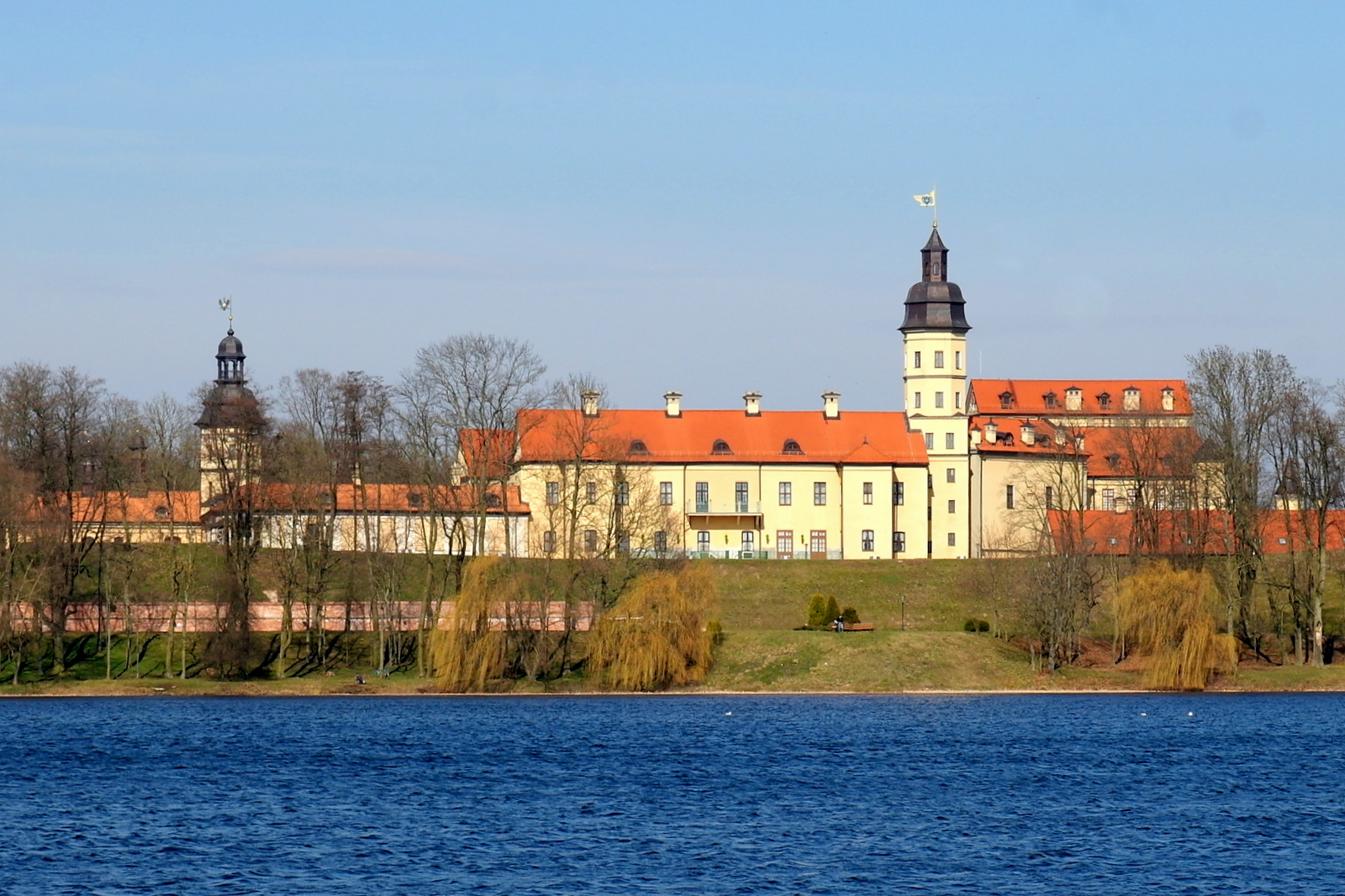
No family in the Polish-Lithuanian Commonwealth accumulated power on quite the scale of the Radziwiłłs. From their origins among the Lithuanian Astikai clan in the early fifteenth century, they rose within a hundred years to princely rank granted by the Holy Roman Emperor, held the grand offices of Lithuania, fielded private armies, and owned hundreds of towns across a territory larger than many European kingdoms. They produced a queen, a Calvinist reformer, and commanders whose names shaped the histories of Poland, Lithuania and the Baltic. After the Partitions they served three empires and yet kept their identity intact, carrying the old name into the modern world.
Origins in the Astikai clan
The family traces its earliest certain origins to the Lithuanian Astikai clan of the early fifteenth century. The patronym "Radziwiłł" derives from Radvila Astikas, a Lithuanian nobleman prominent in the first decades of that century, whose descendants took his given name as the family surname in the fashion common among Lithuanian magnate families of the period.
A later genealogical legend, popular among sixteenth-century courtiers, traced the family back to Lizdeika, the pagan high priest of the grand dukes of Lithuania. Lizdeika made a fine ancestor for a dynasty anxious to underline its antiquity, but the story belongs to the realm of courtly invention rather than documented descent. The documented line from Radvila Astikas was distinguished enough to require no embellishment.
Elevation to princely rank
The sixteenth century transformed the Radziwiłłs from powerful magnates into a formally titled dynasty of the first European order. In 1518 the Holy Roman Emperor Maximilian I elevated the family to the rank of Princes of the Empire (Reichsfürsten), a grant confirmed under Emperor Charles V in 1547. The family now held princely rank in the constitutional order of the Empire as well as supreme influence within the Grand Duchy of Lithuania.
Their principal seats were at Nieśwież, in present-day Belarus, and at Ołyka, in present-day Ukraine. Nieśwież Castle, rebuilt in the late sixteenth century as a residence of the first order, eventually became a UNESCO World Heritage site, its Corpus Christi church serving as the family mausoleum for generations of the house.
Barbara, Queen of Poland
The most dramatic episode in the family’s rise was the secret marriage of Barbara Radziwiłł to King Sigismund II Augustus, heir to the Polish-Lithuanian throne. The match, contracted without the knowledge of the Polish nobility or the king’s mother Bona Sforza, set off a constitutional storm. The nobility objected; the royal court intrigued against it; and Bona Sforza, who regarded the Radziwiłłs as rivals to her own influence over her son, fought the marriage with every instrument available to her.
Sigismund held firm. Barbara was crowned Queen of Poland in Kraków in December 1550, a victory for the king and for the house whose daughter she was. She died in May 1551, within months of her coronation, at the age of about thirty. The king mourned her with an intensity that passed into Polish literary legend, and the Radziwiłłs gained from the episode a prestige no political manoeuvre could have purchased.
Mikołaj "the Black" and the Calvinist reformation
Mikołaj Radziwiłł "the Black" (1515-1565) was in his generation the most powerful figure in Lithuania. As Grand Chancellor and later Grand Marshal of Lithuania, he controlled the administration of the grand duchy at the height of his family’s influence. He was also the leading patron of the Protestant Reformation in the Polish-Lithuanian Commonwealth, embracing Calvinism and funding the translation and printing of the Brest Bible of 1563, the first complete Bible in the Polish language, a landmark of both religious reform and Polish letters.
His cousin Mikołaj Radziwiłł "the Red" followed a different path. Where the Chancellor directed domestic policy, "the Red" commanded armies in the Livonian War, leading Lithuanian forces in the complex and costly struggle for the Baltic littoral that drew the Commonwealth into conflict with Muscovy, Sweden and Denmark. Together the two Mikołajs represented the twin faces of Radziwiłł power: the will to shape ideas and the capacity to project force.
At the summit of the Commonwealth
Through the seventeenth century and into the eighteenth the Radziwiłłs remained among the handful of families who effectively defined the upper limits of magnate power in the Commonwealth. At their height the family held hundreds of towns and thousands of villages across Lithuania, Volhynia and Belorussia, and maintained private armies that could rival the forces of smaller states. Janusz Radziwiłł "the Great" (1612-1655), Grand Hetman of Lithuania, was one of the most controversial figures of his age: a commander who briefly negotiated the Union of Kėdainiai with Sweden during the catastrophic invasion known as the Deluge, an act that later generations debated as treason or pragmatism depending on their sympathies.
Karol Stanisław Radziwiłł, known as "Panie Kochanku" ("My dear friend," his habitual form of address), who lived from 1734 to 1790, was reputedly among the richest private individuals in Europe. Flamboyant, hospitable and politically erratic, he embodied the excess and the vitality of the Commonwealth in its final decades, maintaining a court at Nieśwież that contemporaries described in terms more suitable to a royal residence than a private estate.
From the Partitions to the present
The three Partitions of Poland between 1772 and 1795 dissolved the Commonwealth and distributed its territory among Russia, Prussia and Austria. The Radziwiłłs found themselves subjects of all three empires, and different branches adapted accordingly. Antoni Henryk Radziwiłł (1775-1833) became Duke-Governor of the Grand Duchy of Poznań under Prussian authority. A gifted composer, he was also one of the significant cultural patrons of his day, cultivating a friendship with Goethe and offering early encouragement to the young Frédéric Chopin.
In the twentieth century the family’s connections reached unexpectedly into American political life. Prince Stanisław Albrecht Radziwiłł (1914-1976), a Polish noble who settled in Britain, married Lee Bouvier in 1959, making him the brother-in-law of Jacqueline Kennedy and, by extension, a figure of brief but genuine celebrity in the Kennedy years. The family continues in several lines today. Konstanty Radziwiłł, a physician who has served as both a Polish cabinet minister and senator, is among the most prominent living members of the house.
The House of Radziwiłł, Succession
The entries below trace the principal line from the founder of the princely house through the leading figures of the Commonwealth era and into the modern period. The family divided into several branches over the centuries; the entries follow the most historically prominent individuals rather than a single strict line of descent.
Princes of Nieśwież and Ołyka
- — Mikołaj Radziwiłł IPalatine of Troki; the founder of the princely line; secured the first imperial elevation to the rank of Prince of the Holy Roman Empire in 1518 under Emperor Maximilian I.
- — Barbara Radziwiłł, Queen of PolandDaughter of the house; secretly married King Sigismund II Augustus; crowned Queen of Poland at Kraków, December 1550; d. 1551.
- — Mikołaj Radziwiłł "the Black"Grand Chancellor and Grand Marshal of Lithuania; leading Calvinist patron; funded the Brest Bible (1563); d. 1565.
- — Mikołaj Radziwiłł "the Red"Grand Hetman of Lithuania; commanded armies in the Livonian War; cousin of Mikołaj "the Black"; d. 1584.
- — Janusz Radziwiłł "the Great"Grand Hetman of Lithuania; commanded during the Swedish Deluge; negotiated the controversial Union of Kėdainiai with Sweden in 1655; d. 1655.
- — Karol Stanisław Radziwiłł "Panie Kochanku"Palatine of Vilnius; reputedly among the richest private individuals in Europe; maintained a princely court at Nieśwież; d. 1790.
In the modern age
- — Antoni Henryk RadziwiłłDuke-Governor of the Grand Duchy of Poznań under Prussian rule; composer and patron; befriended Goethe and gave early encouragement to Chopin; d. 1833.
- — Stanisław Albrecht RadziwiłłSettled in Britain after the Second World War; married Lee Bouvier in 1959, becoming brother-in-law to Jacqueline Kennedy; d. 1976.
- — The house todayThe family continues in several lines. Konstanty Radziwiłł, a physician and public figure, has served as a Polish cabinet minister and senator and is among the most prominent living members of the house.
Power built on land, title and patronage
The Radziwiłłs endured where lesser dynasties faded because they understood that power in the Polish-Lithuanian Commonwealth rested on three things held together: the command of land vast enough to fund armies, the possession of office that gave constitutional weight to that land, and the patronage of culture that translated wealth into lasting reputation. They printed the first Polish Bible, crowned a queen, and built a castle that outlasted their state by centuries. After the Partitions scattered the family across three empires, the name carried on, finding new roles in Prussian governance, in the salons of Romantic Europe, and eventually in the political life of the Polish republic their ancestors had helped to shape.