Keepers of Holyroodhouse
The Duke of Hamilton
Premier Peers of Scotland
In Scotland’s order of precedence, no title stands above the Dukedom of Hamilton. The family that holds it descends from a knight rewarded by Robert the Bruce after Bannockburn, married into the royal blood of the Stewarts, came within a step of the Scottish throne, and carried the Crown of Scotland to the foot of Queen Elizabeth II’s coffin in 2022. Theirs is a story of royalist commanders and reluctant regents, of a demolished palace and an unforgettable duel, of a duke who flew over Everest and another who opened his door to a parachuting Nazi. Few houses have touched so many of Britain’s great moments.
From Bannockburn to the royal line
The house traces its origin to Walter fitz Gilbert of Cadzow, a knight who fought for Robert the Bruce and received the barony of Cadzow in Lanarkshire as his reward after Bannockburn in 1314. The family name Hamilton is taken from the lands that grew around it. Sir James Hamilton was created Lord Hamilton in 1445, and he made the alliance that secured everything that followed: his marriage to Princess Mary Stewart, daughter of James II of Scotland, placed Hamilton blood directly in the royal line.
That connection made the Hamiltons heirs presumptive to the Scottish throne for much of the sixteenth century. James Hamilton was created Earl of Arran in 1503, and when James V died in 1542 leaving only the infant Mary, Queen of Scots, it was James Hamilton, 2nd Earl of Arran, who stepped forward as Regent of Scotland. He governed in the queen’s name through her dangerous minority, a man of shifting allegiances and considerable ability, navigating the pressures of England, France and the Reformation with equal parts cunning and caution.
A dukedom and a beheading
The Dukedom of Hamilton was created in 1643, as the wars of the three kingdoms tore Britain apart. James, the 1st Duke, was a royalist commander who served King Charles I and paid the ultimate price: after the Parliamentary victory he was tried and beheaded in 1649, three weeks after the king himself met the same end at Whitehall. The family’s loyalty to the Stuart cause had cost it dearly, but it was a loyalty that brought restoration and reward when the monarchy returned.
The dukedom was confirmed after the Restoration, and the Hamiltons re-established their position at the head of Scottish society. The rank of Premier Peer of Scotland, the highest dignity in the Scottish peerage, was secured to the family and has been held by each successive duke to the present day.
The fatal duel of 1712
The 4th Duke met a violent end that drew all of London’s attention. On 15 November 1712, James Douglas-Hamilton, 4th Duke of Hamilton, fought a duel in Hyde Park with Charles Mohun, 4th Baron Mohun, over a disputed inheritance. Both men were killed in the encounter, the duke run through by Mohun’s second, General Macartney, in what many contemporaries regarded as plain murder. The duel shocked the political world; it had an international dimension too, as the duke had just been appointed Queen Anne’s ambassador to France and was carrying sensitive diplomatic business for the government. Jonathan Swift and other writers of the age set it down as one of the most notorious affairs of the century.
Hamilton Palace and Lennoxlove
For centuries the family’s principal seat was Hamilton Palace in Lanarkshire, raised and enlarged over the centuries into one of the grandest private houses in Britain. By the nineteenth century its art collection rivalled the Crown’s. But the wealth that built it came from coal, and it was coal that destroyed it: the mines driven beneath the palace undermined its foundations irreparably, and the decision was taken to demolish it. The demolition was completed in the 1920s, leaving behind only the mausoleum the dukes had built for themselves in the town of Hamilton, an extraordinary neoclassical structure that still stands.
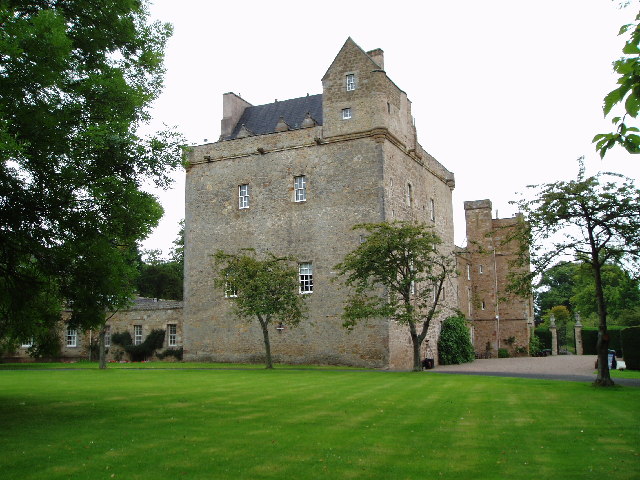
The seat passed to Lennoxlove House in East Lothian, a tower house and mansion that dates in part to the fourteenth century and carries its own layers of history, including its association with Frances Teresa Stuart, the Duchess of Lennox whose face served as the model for Britannia on British coinage. The family also held Brodick Castle on the Isle of Arran, which passed to the National Trust for Scotland in 1958.
Everest, Rudolf Hess, and the 14th Duke
No holder of the title achieved greater celebrity in his own lifetime than Douglas Douglas-Hamilton, 14th Duke of Hamilton. On 3 April 1933 he was a member of the Houston Everest Expedition, and the flight he made with David McIntyre over the summit of Mount Everest was the first time any aircraft had passed above it. He was thereafter the Marquis of Clydesdale, as he was still known before he succeeded to the dukedom, and he returned from the flight as a national figure.
Eight years later his name appeared in one of the strangest episodes of the Second World War. On the night of 10 May 1941, Rudolf Hess, the Deputy Führer of Nazi Germany, parachuted into Scotland and asked to be taken to the Duke of Hamilton. Hess believed the duke, whom he had met at the Berlin Olympics in 1936, would be sympathetic to a German peace proposal and could serve as an intermediary with the British government. The duke was not, and could not. He reported the matter to Winston Churchill and played no part in any negotiation. Hess was interned and spent the rest of his life a prisoner.
The Premier Peer in the present day
As Premier Peer of Scotland, the Duke of Hamilton holds a dignity that no other Scottish title can outrank. He is hereditary Keeper of the Palace of Holyroodhouse, the monarch’s official residence in Edinburgh, and bearer of the Crown of Scotland, the oldest crown in the British Isles. When Queen Elizabeth II died at Balmoral in September 2022, it was Alexander Douglas-Hamilton, 16th Duke, who placed the Crown of Scotland on her coffin as it rested in the cathedral church of St Giles in Edinburgh, a moment watched by millions.
The family arms bear the device of the Hamiltons, gules three cinquefoils ermine, quartered with argent a lymphad sable for Arran, a reminder of the earldom that brought the house into the orbit of the Scottish crown five centuries ago. The motto is a single word: Through.
The Dukes of Hamilton, Succession
The Dukedom of Hamilton in the Peerage of Scotland was created on 12 April 1643 for James Hamilton. The family had held the title of Earl of Arran since 1503 and Lord Hamilton since 1445; its connection to the Scottish royal line descends from the 1445 marriage to Princess Mary Stewart.
Origins and early lords
- — Walter fitz Gilbert of CadzowAncestor of the house; received the barony of Cadzow from Robert the Bruce after Bannockburn, 1314
- — James Hamilton, 1st Lord HamiltonCreated Lord Hamilton 1445; married Princess Mary Stewart, daughter of James II, bringing the family into the royal line of succession
Earls of Arran and the Regency
- — James Hamilton, 1st Earl of ArranCreated Earl of Arran 1503; grandson of the 1st Lord Hamilton
- — James Hamilton, 2nd Earl of ArranRegent of Scotland for the infant Mary, Queen of Scots, 1542–1554; heir presumptive to the Scottish throne
Dukes of Hamilton (Peerage of Scotland, 1643)
- — James Hamilton, 1st Duke of HamiltonCreated duke 1643; royalist commander in the Wars of the Three Kingdoms; beheaded 1649, three weeks after Charles I
- — James Douglas-Hamilton, 4th Duke of HamiltonKilled in the famous Hyde Park duel with Lord Mohun, November 1712; had been appointed ambassador to France
- — Douglas Douglas-Hamilton, 14th Duke of HamiltonFirst man to fly over Everest, 3 April 1933; the man Rudolf Hess sought when he parachuted into Scotland, 10 May 1941
- — Alexander Douglas-Hamilton, 16th Duke of HamiltonPremier Peer of Scotland; succeeded 2010; placed the Crown of Scotland on Queen Elizabeth II’s coffin at St Giles’ Cathedral, September 2022
Through
From a knight rewarded with Lanarkshire lands after Bannockburn to the Premier Peer who laid the Crown of Scotland on a queen’s coffin before a watching world, the story of the house of Hamilton spans seven centuries of Scottish and British history at its most dramatic. They stood at the edge of the throne and stepped back; they lost a palace to the mines beneath it; they sent a duke into the sky above Everest and found themselves at the centre of the strangest episode of the Second World War. The motto they carry is no ornament. It is a record of what the family has done. Through.